
When you’re on vacation, and you have the opportunity to do an activity that you can only do in a few places around the world, YOU DO IT! Kona, on the Big Island of Hawaii, is the only destination for night snorkeling with manta rays in the US and is one of only a few locations worldwide.
PADI lists Kona, Hawaii as one of the best places to dive with manta rays across the globe, and Travel Channel describes the activity as one of the most thrilling experiences on Earth. Descriptions don’t get any better than that!
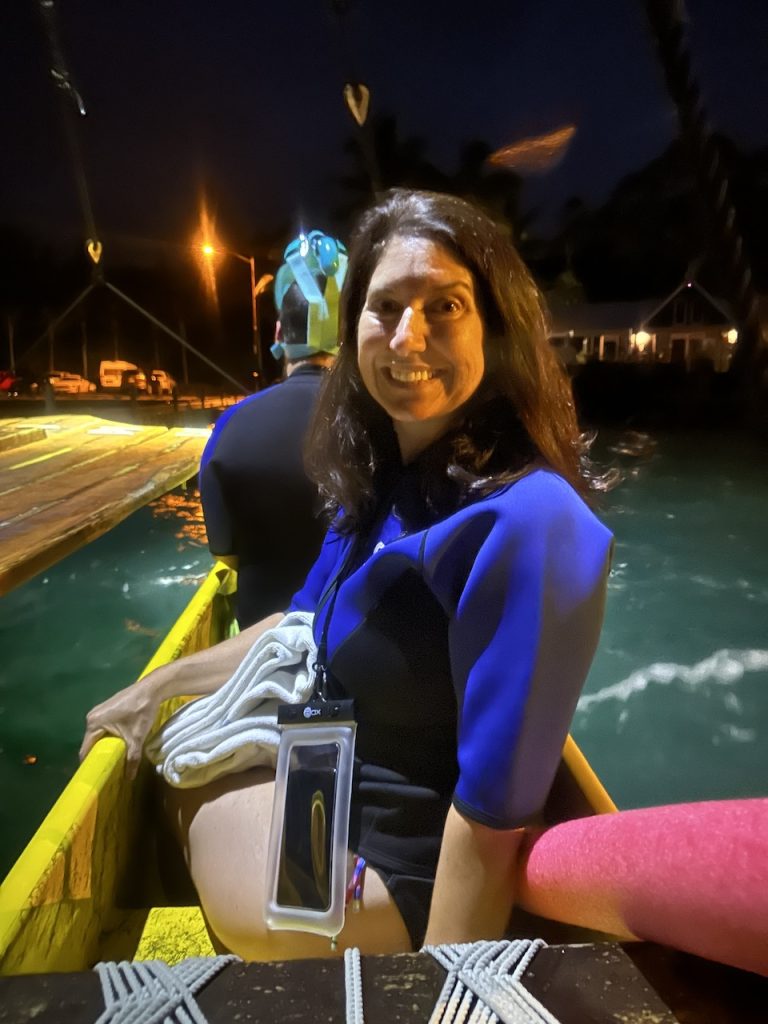
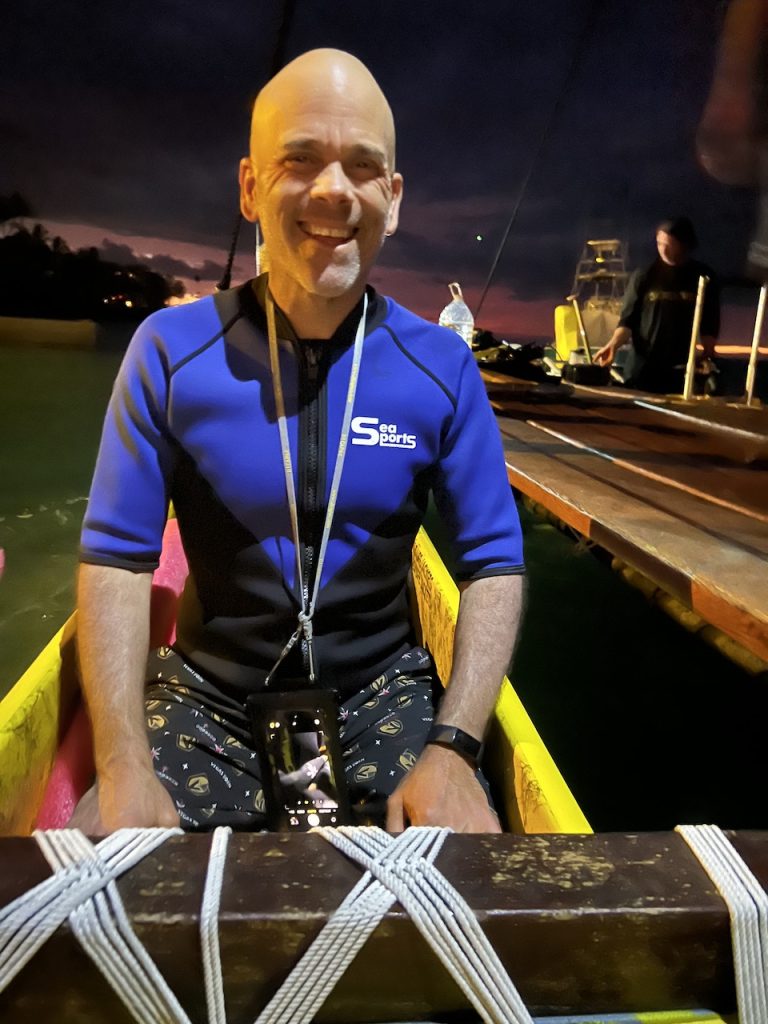
I’d like to say that I agree with both, but unfortunately, our trip ended in disappointment. There were at least 5 other boats, 100+ snorkelers, and ZERO manta rays.
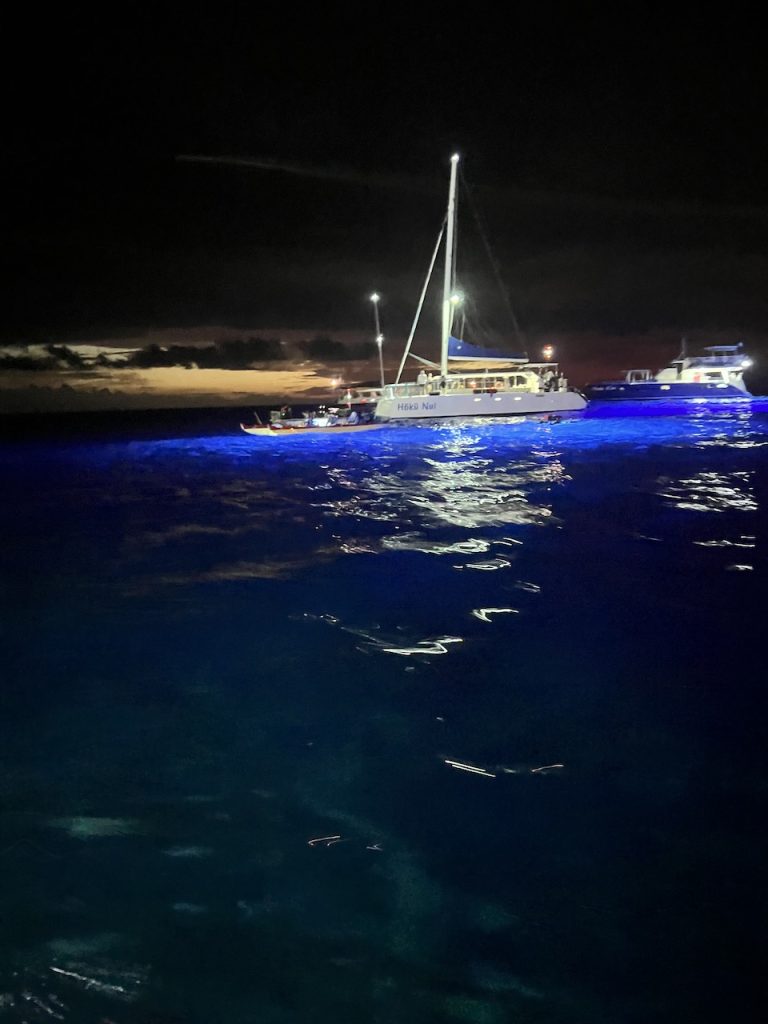
We have since learned that the tours have about a 70% success rate of seeing the manta rays. We probably would have still gone out, but those odds don’t sound great. I live in Vegas, so I know a thing or two about odds.
If you get nothing else out of this post, remember this: book activities you really care about during the first few days of your trip! The tour company we used has a “manta ray guarantee,” offering to take you out again if you don’t see any manta rays, but since we went on our last night, we didn’t have another night left to try again. There were people in our canoe who had been out the night before and not seen anything, and due to the lack of rays visible on our trip, they planned to go out again the following night a third time.
I can’t tell you about seeing the manta rays up close, which I’m sure would have been amazing, but I can tell you about the many other aspects of the trip worth sharing.
Let’s start with the basics. For night snorkel with manta rays, you hold onto a floating board, lay face first in the water, use a pool noodle to keep your feet up, and wear snorkel gear to see what’s below you in the water.
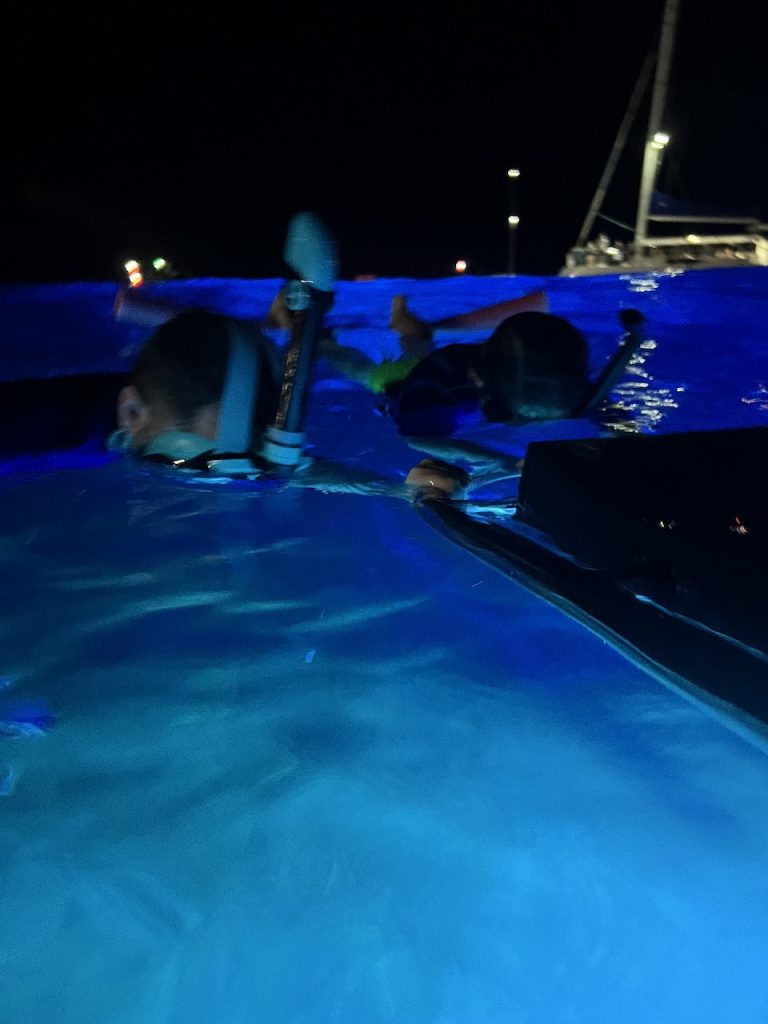
The floating board has bright lights attached to the underside which attract photosynthetic plankton. Manta rays eat this plankton, so they are drawn to these feeding grounds, giving snorkelers an up-close experience.
No tour companies in Kona offer “free” snorkeling with the manta rays. All companies require that you hold onto a floating board, which was fine by me.
There are three manta ray viewing spots on the Big Island of Hawaii. We went to “Manta Village,” which is near the Outrigger Kona Resort & Spa (previously the Sheraton Kona), near the mouth of Keauhou Bay.
FACT: Manta rays eat plankton, specifically zooplankton, which are small animals and the immature stages of larger animals (copepods, mysid shrimp, crab larva, mollusk larvae and fish eggs).
We went out with Eka Canoe Adventures because they use a Hawaiian double-hull canoe which is safer for the manta rays. They are a locally-owned company, and they give part of the trip ticket income back to the community. Pretty cool! The guys who ran the trip turned out to be excellent too!
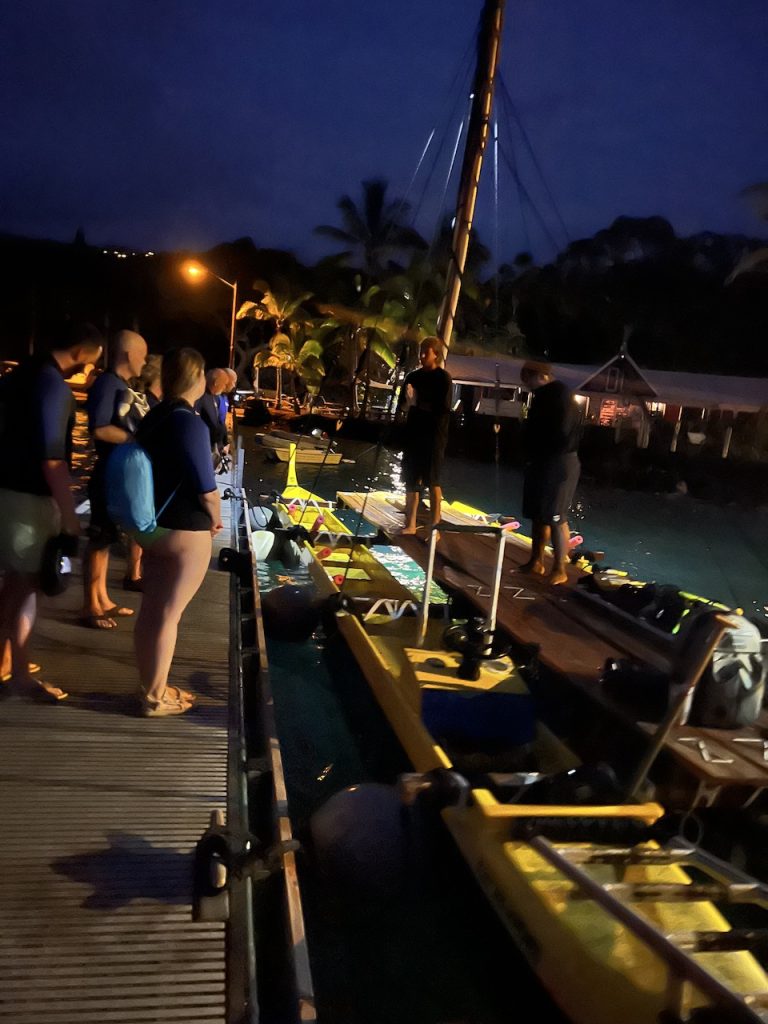
After a short explanation about the canoe, safety procedures, and of course, the dos and don’ts of snorkeling with the manta rays, we were off on our adventure.
As we made our way out to sea, we could see big patches of glowing light in the water. As we got closer, we saw dozens of people holding onto floating light boards with snorkels sticking up into the air. It was a very strange image. We were eager to get into the water and see what they were looking at, but at the same time, it was dark, cold, and more than a little unsettling.
We each took turns swinging our legs over the side of the canoe, and jumping feet first into the ocean. From there, it was a short swim to the board. The trickiest part came next, which was getting the pool noodle down to our feet to keep our legs from dangling while we laid on our stomachs. Our poor guide was continually swimming around the board retrieving our pool noodles as they escaped from under our feet. We weren’t allowed to let go of the board. The current was very strong, and I think he’d rather swim out to rescue our noodles than have to rescue one of us.
The lady across from me started freaking out when a huge eel swam under us. I wasn’t nervous until she started panicking, which made me think maybe there was a reason to be scared. The guide stayed very calm and assured the lady (and me) that the eel had no interest in us and would not leave the reef floor to check us out. I don’t know if that’s true or not. That being said, we didn’t see the eel again, so I was happy.
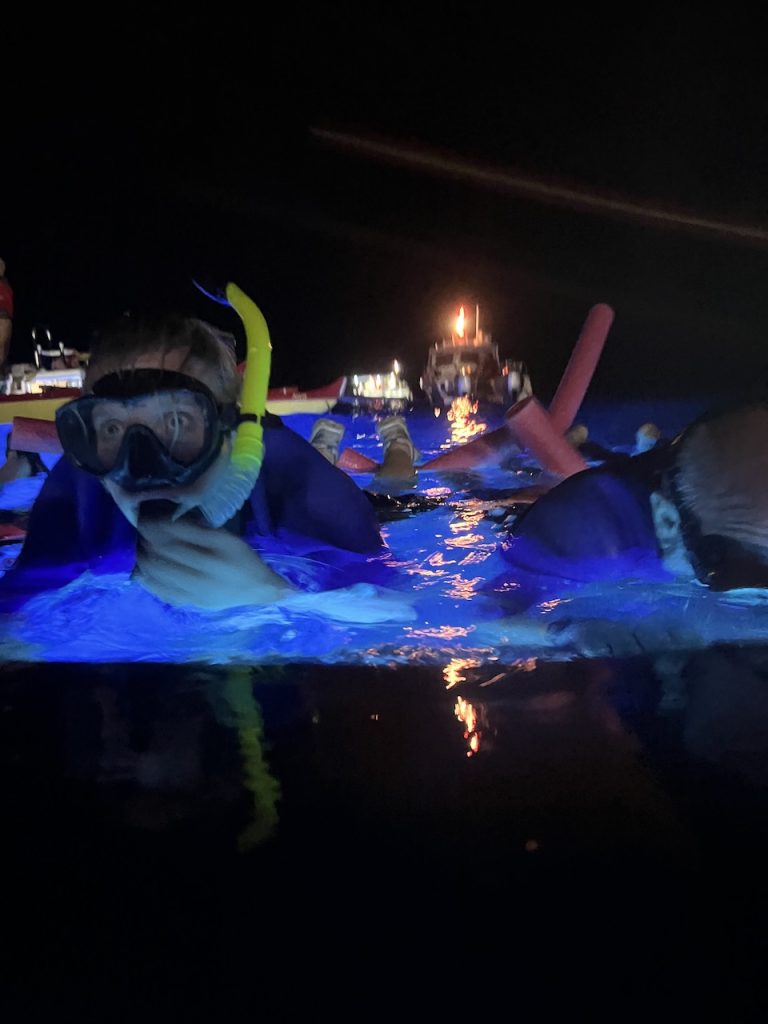
Worse than not seeing manta rays was one of the passengers on the trip. Let’s call him Dumb Guy. DG started the night by announcing that he brought his own wetsuit and snorkel gear as he is an experienced diver and has done this activity before. I don’t know if it was WHAT he was saying or the fact that he stood around with his shirt off while the rest of us were still dressed in our clothes and freezing that rubbed us the wrong way. (Yes, he did have muscles worth showing off, but that’s not the point!) Throughout the trip, he pointed out the various types of fish, guesstimated how much they weighed, told stories about catching them, and on and on. No one engaged him in conversation. He just kept talking! I thought it was hilarious when he admitted at the end of the trip that, although he has done night snorkeling twice before, he has never seen any manta rays. I wanted to tell him that he might be keeping them away with his constant jabber.
ABOUT MANTA RAYS
Manta rays are one of the largest ray species, often seen on coastal and oceanic reefs. In very basic terms, they have broad heads, enormous, wide mouths, and gill rakers.
What are gill rakers you might ask (as I did)? Manta rays use them to filter out plankton.
Unfortunately, many Asian markets market the gill rakers as a traditional medicine, increasing exploitation from trade and adding to reasons that they are categorized as vulnerable by the International Union for Conservation of Nature.
Fishing lines, hooks, boat hulls, and tourists touching the manta rays also contribute to their vulnerability. The State of Hawaii and manta ray advocates are working on regulating the tourism snorkeling trips, but ocean ecotourism is big business and regulations are painfully slow and cumbersome.
Manta Ray Night Snorkel in Kona
Duration: 1 hour
Ages: Minimum age for participants is 5
Note: Previous swimming experience is required
What to Bring
- Towel
- Bathing suit
- Motion sickness medication (I would definitely take it if you get motion sickness at all. I didn’t feel it on the short canoe ride, but being in the rough water made all of us a little queasy.)
- Waterproof camera or GoPro
- Dry clothes for after (Keep these in your car.)